Feeding Kids, Not Trash Cans: Waste Reduction Practices That Transform in K-12
By Angie Crone, Eat Real Director of Innovation
About 30% of food in America goes uneaten — wasting farmers’ efforts, limiting nutrition for communities, and impacting the planet.1
A big solution is hiding in a surprising place: public schools. Our nation’s schools serve over 7 billion meals each year, representing a critical opportunity to combat food waste and ensure more of that food reaches kids’ stomachs. Astoundingly, an estimated 21% of the calories in school meals never even make it to students’ stomachs.2
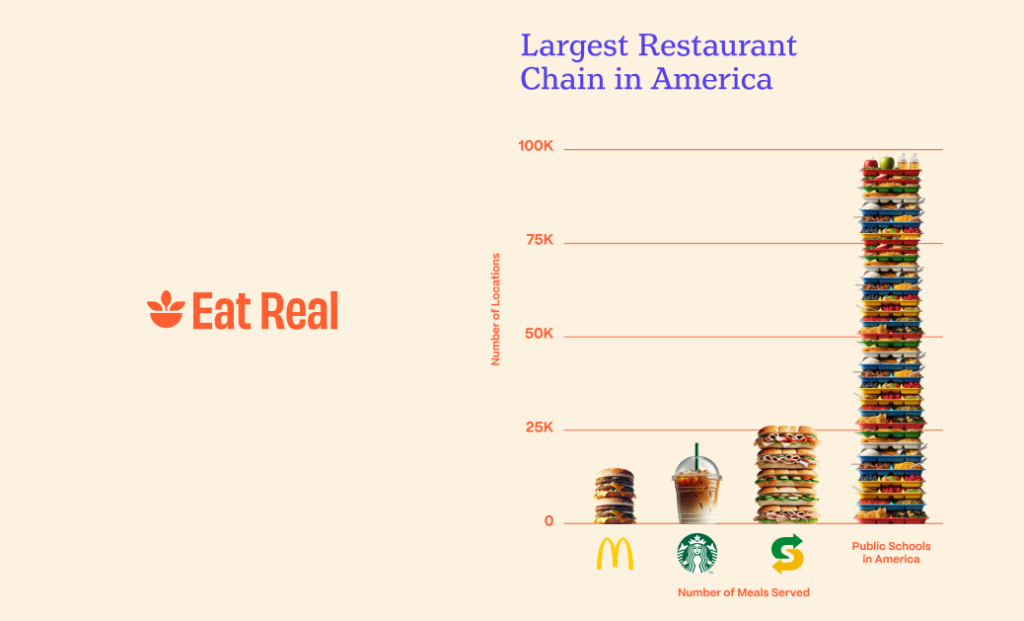
School cafeterias are the largest restaurant chain in America — with more locations than McDonald’s Starbucks, and Subway combined.
At Eat Real, we’re dedicated to feeding kids, not trash cans. Through our K–12 certification program, we help school food leaders wield data to serve meals that are more nutritious, responsibly sourced, and mouth-wateringly delicious. Guided by the EPA’s Wasted Food Scale, our Waste Prevention standard sets a simple goal: stop waste before it starts.
Methods Are the Measurement
We believe plate waste studies can teach us a lot: 20% of our districts have performed them and found them valuable. Tracking what students eat — and what they leave behind — allows school food leaders to target effective changes, and helps ensure meals deliver real nutrition. But regular plate waste audits can take significant time and staff resources — the two scarcest resources for school food leaders.
That’s why Eat Real recognizes and rewards evidence-backed strategies that prevent food waste, from procurement through service and beyond. Just because you don’t have the resources to measure your food waste doesn’t mean you can’t start actively reducing it.
Thanks to the insights gathered from plate waste studies nationwide, we now know a lot about what we can do to help students consume the food they’re served.
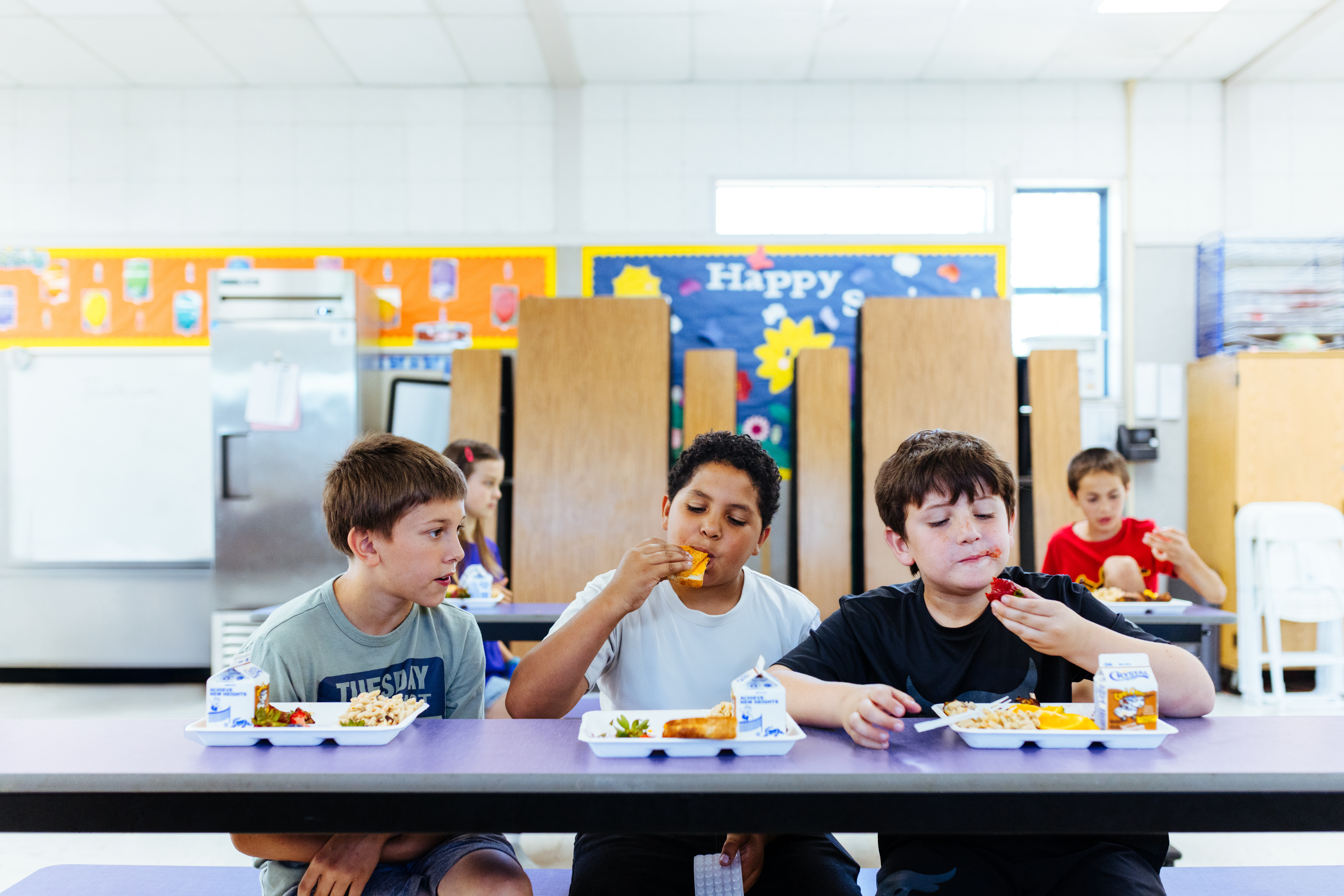
Pictured: Elementary students at Eat Real Certified Green Western Placer Unified School District.
Prevent Waste Before the Plate
Here are a few of the waste prevention methods our participating districts find most successful. Hint: It’s a lot about taste, time, and tiny bites!
Make food delicious.
It sounds simple, but it’s not, as anybody who’s ever tried to feed one kid, much less thousands, knows. Students eat more when meals match their tastes, and when they’re involved in the decision-making. Studies show that engaging students in menu planning through taste tests, surveys, or advisory panels consistently reduces plate waste.2 Freshly prepared entrées and culturally familiar choices help make meals appealing and increase how much kids actually eat.
Make food accessible.
Fruits and vegetables are among the most frequently tossed items in school cafeterias—up to 75% of vegetables and 40% of fruits go uneaten!3 Simple changes, like cutting produce into smaller, easy-to-eat pieces, can boost how much kids actually eat to 90%, compared with 30–45% for whole items.4 Nearly all Eat Real districts offer bite-sized fruit on most days of the week, reducing waste while making sure kids get the nutrients and fiber they need.
Serve smarter.
To receive funding for the meals they provide, schools must offer a variety of food components in specified serving sizes. This alone creates waste by forcing students to take more than they’ll eat. That’s why 89% of participating Eat Real districts employ flexible policies like the USDA’s Offer vs. Serve, which allows students to decline parts of their meal and take only what they’ll eat, resulting in significantly lower levels of plate waste.5 This includes milk, one of the most commonly wasted foods. Pilot programs, as well as data collected by Eat Real districts, show that by serving bulk milk, schools can cut milk waste by more than half while also reducing packaging waste.6
Give students time to eat.
34% of Eat Real participating districts confirm that ensuring at least 20 minutes of seated lunchtime is associated with significantly greater fruit and vegetable consumption and less waste.7 Grab-and-go options, pre-ordering, and additional service lines all help students get to their seats faster.
Connect kids to the tray.
83% of Eat Real districts implement farm-to-school activities such as taste tests, school gardens, meeting local farmers, and hands-on cooking lessons. These practices help students understand where food comes from — and value it more. Evidence from the 2019 School Nutrition and Meal Cost Study shows that students in farm‑to‑school programs waste less food. Connecting kids to the source of their meals actually changes what ends up in the bin.
These kinds of practical steps are exactly what our certification program recognizes and rewards.
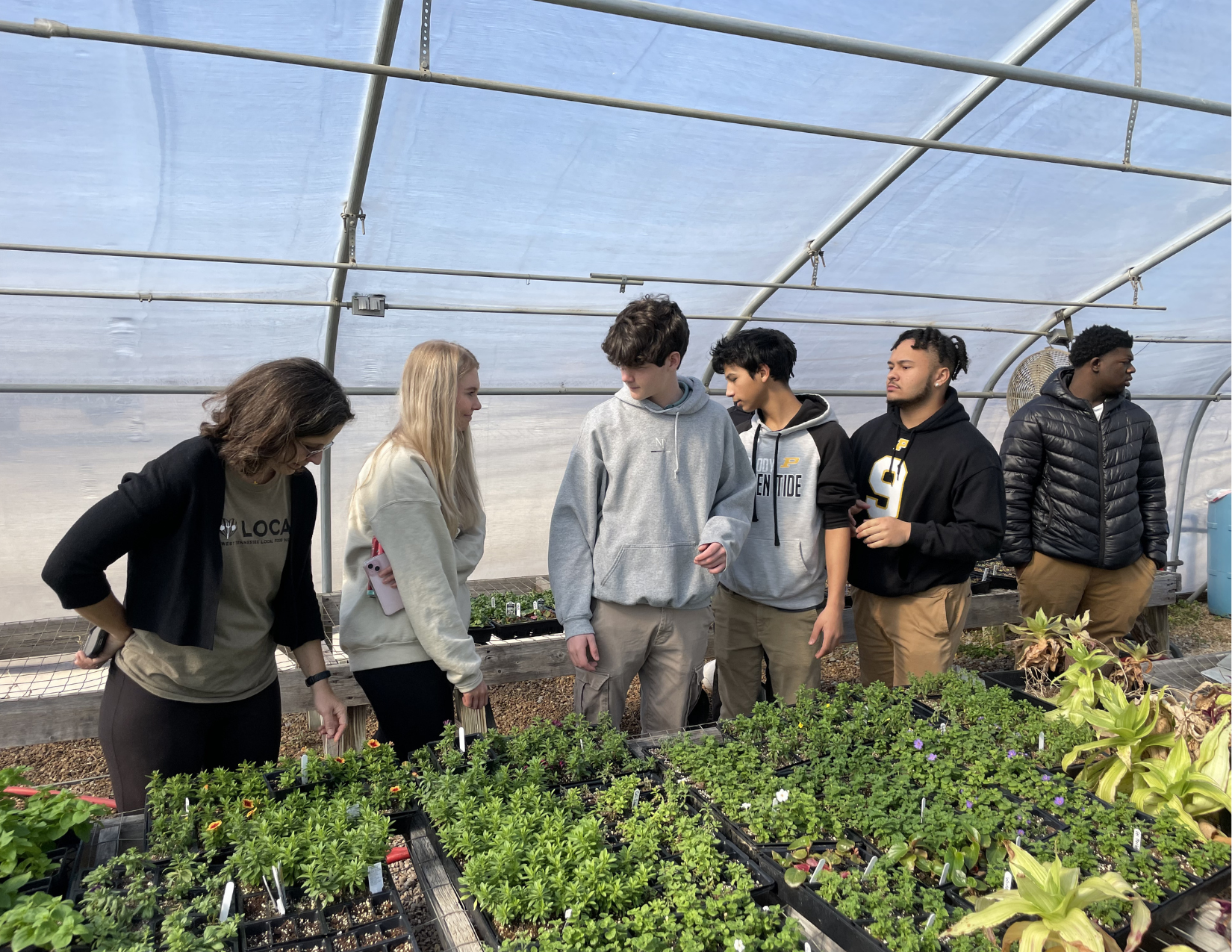
Pictured: Middle school students at Trenton Special School District learning about their schools Farm-to-School program.
When Waste Happens
Even with thoughtful planning, kids sometimes end up with food they don’t want. When that happens, schools have proven, practical ways to keep good food out of the trash. Following are the most popular methods employed by Eat Real participating districts:
1. Share & Save.
Share tables that allow unopened items to be enjoyed by other students are the second most popular waste reduction strategy employed by 77% of Eat Real participating districts.
2. Save food for later.
Half of Eat Real’s districts also let students take food with them, giving them another chance to eat it later in the day, instead of throwing it away.
3. Donate to those in need.
Nearly half of Eat Real districts partner with local food banks, shelters, or food recovery organizations to allow uneaten food to support families in the community while reducing waste.
4. Reuse and recycle packaging.
Packaging accounts for 42% of school municipal waste. Schools are tackling this by using reusable cups and utensils, offering bulk condiments, cutting back on single-use plastics, and expanding recycling programs. 59% of Eat Real districts have already eliminated plastic straw usage, and nearly half have switched their most commonly used condiments from single-use packets to bulk dispensers or squeeze bottles.
5. Close the loop.
For the unavoidable scraps, schools implement waste-sorting systems and clearly marked disposal stations. Composting programs add another layer of diversion, with 41% of Eat Real districts already on board. These systems guide students to reduce landfill waste and teach them how food systems work after the meal is finished.
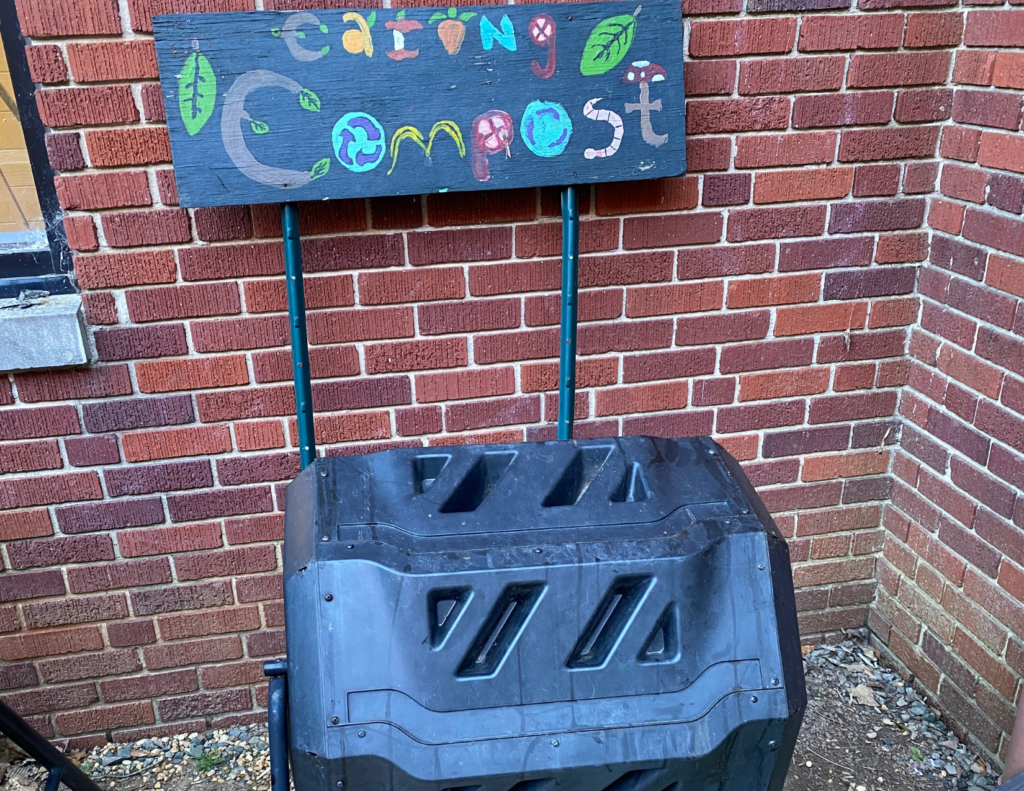
Pictured: Compost station at Eat Real partner district Marietta City Schools in Marietta, GA.
Big Impact, Practical Steps
Reducing food waste doesn’t always require complicated systems or extra staffing. Often, the biggest impact comes from simple concepts:
- Serve meals kids actually enjoy
- Give students enough time to eat
- Empower students to make their own choices
- Connect kids to the tray
Together, these shifts help schools reduce waste before it starts, make the best use of their resources, and ensure more kids get the nutrients they need.
School food heroes are our everyday partners in this work. Through our ten Eat Real Standards, we guide and recognize the work they do to implement practical, evidence-backed steps that nourish, educate, and inspire students with every meal.
We see it every day.
Angie Crone is the Director of Innovation at Eat Real, leading the design, testing, and scaling of bold ideas that help school districts serve healthier, more delicious meals to students nationwide. Angie grew up on a small rural farm where food — the time, care, and resources behind growing it — were valued and put to their highest use. She draws on this foundation to advance food waste solutions, having led the Upcycled Food Association as CEO, expanded surplus food distribution to communities during COVID, and shaped ethical supply chains globally, to build systems and movements that transform food environments.
Eat Real is the only doctor-led, foodservice-approved nonprofit empowering public schools with a holistic solution to transform the health of their students and their bottom line. Partnered with 61 school districts across 21 states, Eat Real now serves over 1 MILLION students! Learn more about Eat Real Certification at eatreal.org.
Sources:
Note: % of districts is based on our most recent assessment cohort (n = 18 assessments).
1. ReFED. (n.d.). Food Waste Data-Causes & Impacts. ReFED.
2. Fox, M. K., Gearan, E., Cabili, C., Dotter, D., Niland, K., Washburn, L., Paxton, N., Olsho, L., LeClair, L., & Tran, V. (2019). School Nutrition and Meal Cost Study, Final Report Volume 4: Student participation, satisfaction, plate waste, and dietary intakes (Report No. USDA-FNS-2019). U.S. Department of Agriculture, Food and Nutrition Service.
3. School Nutrition Association. (2016, Spring). Fruit and vegetable plate waste among students in a suburban school district.
4. Burg, X., Metcalfe, J. J., Ellison, B., & Prescott, M. P. (2021). Effects of longer seated lunch time on food consumption and waste in elementary and middle school–age children: A randomized clinical trial. JAMA Network Open, 4(6), e2114148.
5. UCSD Community Health. (2016, July 26). An elementary school student waste case study [PDF file].
6. United States Department of Agriculture, Food and Nutrition Service. (2025). Offer versus Serve flexibilities for the National School Lunch Program and School Breakfast Program (SP 14‑2025).
7. World Wildlife Fund & Triangle Associates. (2024). Fresh results: How bulk milk dispensers cut waste in schools. World Wildlife Fund.