FarmTECH: Morgan Hill’s 20-acre bet on the future of school food
Farm-to-school programs have transformed how districts think about food. Meals get fresher. Local economies get a boost. And students get a hands-on understanding of where their food actually comes from. The USDA defines a farm-to-school program simply: link local producers with schools to purchase and include locally grown produce, grains, meat, dairy, and seafood in program meals, and pair it with hands-on education (U.S. Department of Agriculture, Food and Nutrition Service, n.d.).
The definition is broad by design, built to meet the needs of the unique communities across the country. Food education can look like school gardens, taste tests, farm field trips—or in the case of one district in California—a 20-acre, fully immersive farm.
In 2019, Michael Jochner, Child Nutrition Director at Morgan Hill Unified School District, saw the potential in the high school’s existing FFA barn and set out to turn it into something far more ambitious: FarmTECH.
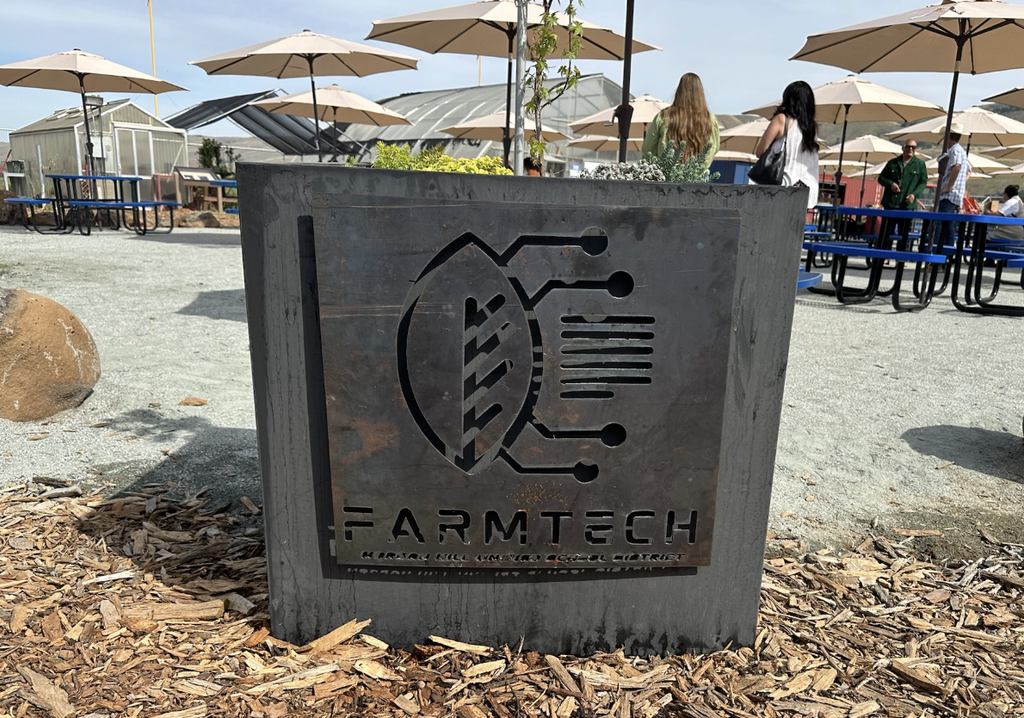
Welcome to FarmTECH!
Full immersion, by design
FarmTECH is a living, breathing ecosystem designed to feed students while educating them about the food system and connecting them to the land and people it comes from. The site includes:
- 11 raised garden beds
- A greenhouse and nursery producing between 50,000 and 75,000 seedlings annually
- A vineyard where high school students will take part in harvesting the fruit
- An 18-acre orchard filled with stone fruits, nuts, and diverse crops intended to support year-round production
The vision goes beyond food production to full immersion:
“I want it to be the Disneyland of school farms. Like Walt Disney imagined, attendees would be so immersed in the park that they would forget about the outside world. I want students to not be able to see the highway or any other streets — fully immersed in the farm!”
— Michael Jochner, Student Nutrition Director at Morgan Hill Unified
A classroom first
Supported by a grant from the California Department of Food and Agriculture (CDFA), the farm was designed for student learning.
While visiting FarmTECH, Jochner painted his vision for one specific acre dedicated entirely to becoming an outdoor classroom. It will include:
- One of each tree from the orchard
- Students harvesting the crops themselves — pulling produce straight from the soil
- A district food trailer onsite, preparing what the students just picked
This hands-on approach transforms the lessons about nutrition and agriculture into tangible, memorable lessons.

Pictured: Student Nutrition Director Michael Jochner taking guests on a farm tour, and sharing what he has planned for the one-acre outdoor classroom.
Investing in local partnerships
In rural and urban communities across the country, every dollar spent on school food sends an additional $0.86 back into local economies (U.S. Department of Agriculture, Food and Nutrition Service, n.d.). Morgan Hill Unified Student Nutrition understands that and has excelled at local procurement, with 61% of its produce locally sourced. Read more about their Eat Real certification at the Green Tier here.
Jochner emphasized that the FarmTECH complements the district’s existing partnerships, creating more opportunities rather than competition.
“There’s no way that I can produce as many or as good of a San Marzano tomato for our pizza sauce as Oya Organic, my local farmer — that’s what they are good at. They grow an incredible tomato, and I can focus on what we do best: turning those tomatoes into something our students love.”
— Michael Jochner, Student Nutrition Director at Morgan Hill Unified
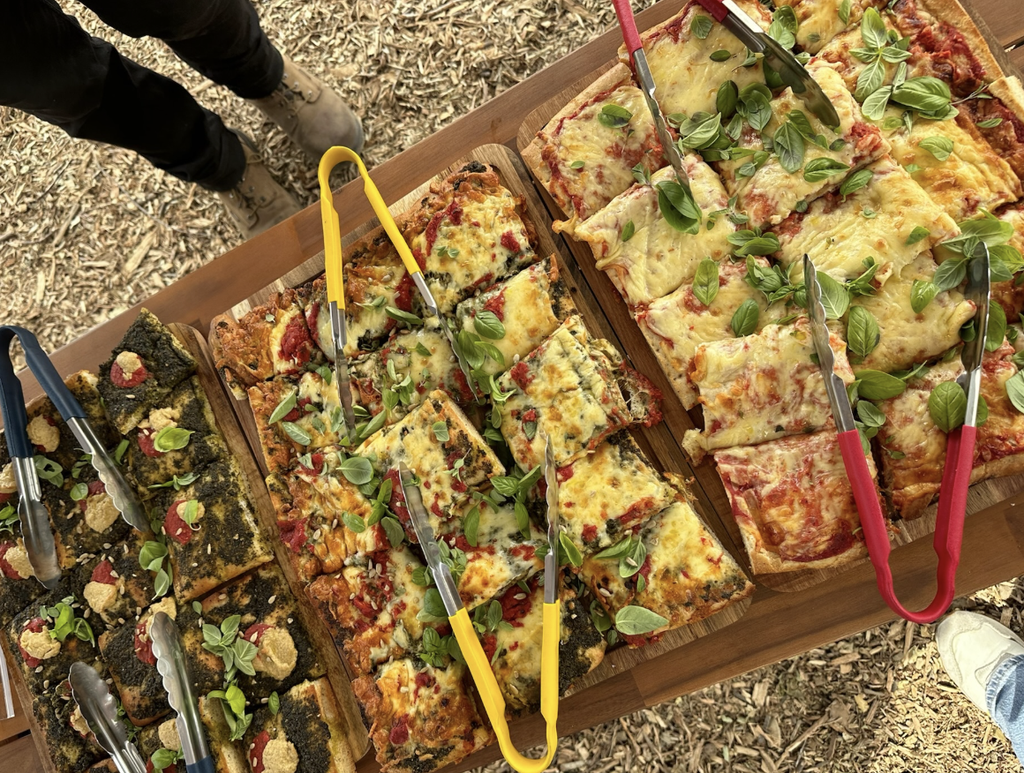
Pictured: Focaccia pizza featuring scratch-made pizza sauce using Oya Organic’s San Marzano tomatoes.
One of those farmers is Yadari Mendiola, who proudly calls herself the “Queen of Vegetables.” She passionately leads Community Farmers, which organizes five organic farms in Monterey County to collectively supply school districts, showing the power of collaboration in local food systems.
Growing healthier habits
Another farmer contributing to the work is Dr. Janet Nagamine of Hikari Farm. Having inherited her family’s farm in Watsonville, she grows apples and Japanese cucumbers. As an emergency room physician, she is passionate about her role as a farmer as a form of preventative medicine, “I believe I save more lives as a farmer.” says Nagamine.
The fresh produce Mendiola, Nagamine, and the district’s other local partners bring to students isn’t just fresher and closer to home, it’s changing how students eat. Farm-to-school programs have been found to increase fruit and vegetable consumption for students who had previously very low intake, simply because of the exposure to the produce (Bontrager Yoder et al., 2014). These are programs that have real weight, real impact in creating healthy habits for students.
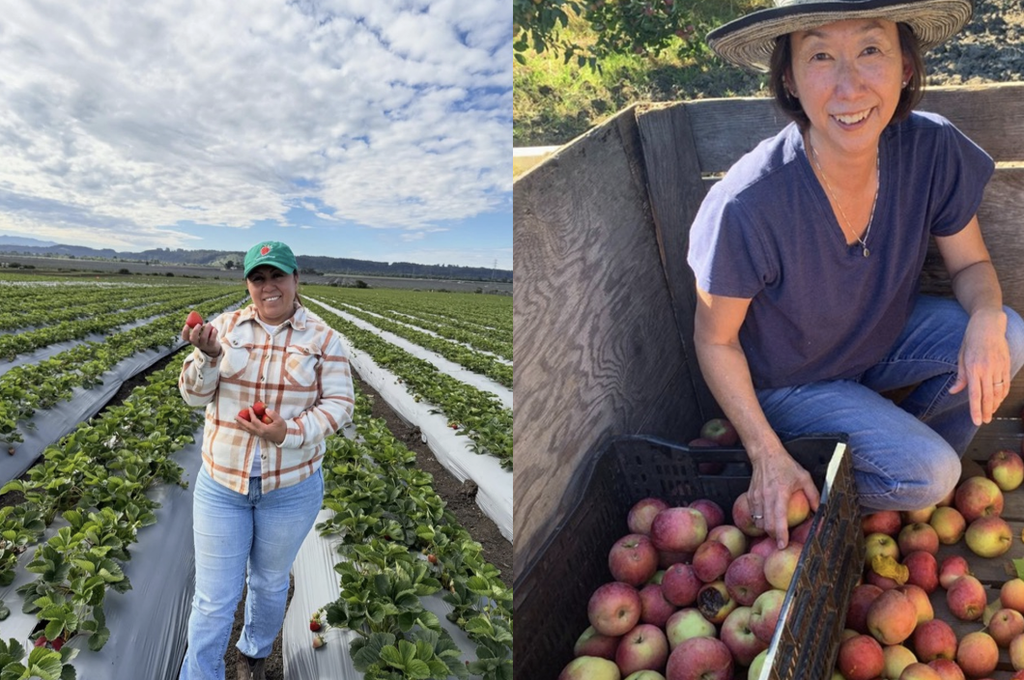
Pictured: Yadari Mendiola (left) and Dr. Janet Nagamine (right)
More than a farm
Morgan Hill’s FarmTECH is more than a farm — it’s a blueprint. By bringing students to the source of their food, the district is growing not only crops, but the local economy, the health of its students, and the curiosity to simply try something new.
In a world where your food feels like it just appears in stores or on your plate, FarmTECH offers something rare — a place where students can see, touch, taste, and truly understand the journey from seed to tray.
Looking to donate farm equipment or your time? Please contact the team at [email protected].
Citations
Bontrager Yoder, A. B., Liebhart, J. L., McCarty, D. J., Meinen, A., Schoeller, D., Vargas, C., & LaRowe, T. (2014). Farm to elementary school programming increases access to fruits and vegetables and increases their consumption among those with low intake. Journal of Nutrition Education and Behavior, 46(5), 341–349. https://doi.org/10.1016/j.jneb.2014.04.297
U.S. Department of Agriculture, Food and Nutrition Service. (n.d.). Farm to School. https://www.fna.usda.gov/f2s/new