Eat Real’s vision takes root in Michigan, with Montague APS
Tell us if you’ve heard this one: A food service director, a superintendent, and a farmer walk onto a school bus. Sorry, no fun punchline here. Just a lead-in to a delicious and inspiring school food experience!
Last week, Eat Real partnered with Michigan school district Montague Area Public Schools (MAPS) to host its very first Michigan school lunch tour. It was a chance to bring community members and school food advocates together to celebrate the incredible work of Dan Gorman, Foodservice Director for Montague Area and North Muskegon Public Schools, and his team.
It started with a bunch of adults riding a school bus — the same bus Montague students ride every day — to Lundell Farms to experience the farm-to-school education provided to MAPS students.
Later, they sat down to lunch with dozens of NBC Middle Schoolers, enjoying BBQ chicken raised by the school’s own FFA program, local Michigan asparagus, and a student-created coleslaw recipe. Not a catered event. Just Friday lunch.
And it is exceptional.
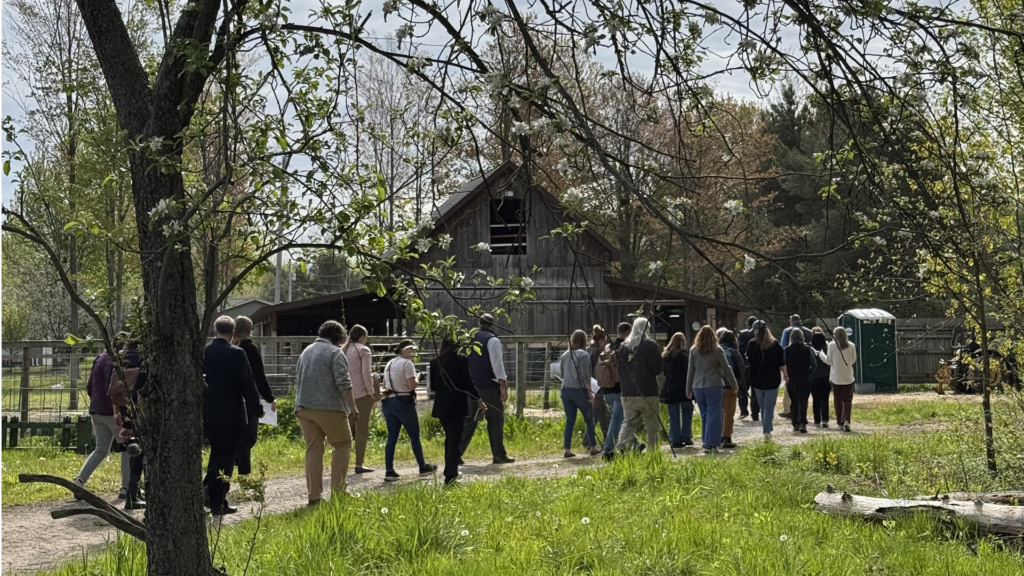
Pictured: Attendees toured Lundell Farms, a regular field trip spot for Montague students.
“No matter what age you are, I think it’s important to be thankful for farmers, and we need to be thankful for the animals. If you’re getting [meat] from a mass facility with thousands of pigs all indoors, it’s not as good of quality, and you have to think about how it’s affecting those animals. They’re living creatures, too. I think it’s important for everyone to know so that when we sit down to eat, we can be grateful for the food in front of us.” —Lori Lundell, Owner of Lundell Farms
First in Michigan, and a model for what’s possible
Located along the Lake Michigan shoreline in West Michigan, Montague Area Public Schools isn’t the largest district in the state. But what Dan Gorman and his team have built here is nothing short of remarkable.
From school gardens to a thriving FFA and culinary program, Montague has woven food culture into the fabric of student life. Students grow vegetables in the school’s hoop house. They raise the chickens that end up on the lunch tray. They create the recipes their classmates eat every day. And they take field trips to local farms to gain an appreciation of where their food comes from and the integral role food systems play in their health and futures. This is what it looks like when a food service director doesn’t just feed students — he educates them, connects them, and invests in their relationship with food for life.

Pictured: Dan Gorman, Food Service Director at Foodservice Director for Montague Area and North Muskegon Public Schools, speaks to attendees in front of the on-campus hoop house.
Montague is the first district in Michigan to partner with Eat Real, and for the Eat Real team, spending time in Gorman’s program has been genuinely inspiring.
“We chose to work with Eat Real to receive clarity and a proven path to move our school food service program to healthier food for our students.” —Dan Gorman, Food Service Director
That clarity goes both ways. Working alongside Dan and his team has sharpened our own sense of what’s possible when leadership, community, and a real commitment to kids come together.

Pictured: MAPS kindergarten student getting hands-on learning about how food grows at the hoop house.
Why Michigan and why now
Eat Real’s presence in Michigan isn’t accidental. The organization has set a goal of reaching 100,000 students across Muskegon, Kent, and Ottawa counties — a region where strong agricultural roots, engaged foodservice leaders, and growing community momentum make meaningful, lasting change possible. Montague is the proof of concept.
The timing is also urgent. Michigan school districts, like those across the country, are navigating a difficult funding environment. Michigan’s 10-cent reimbursement program, a critical support mechanism that helps districts offset the cost of locally sourced ingredients, has faced changes that threaten to undermine the progress districts like Montague have worked so hard to achieve. For food service directors already operating on tight budgets, that uncertainty hits close to home, and it makes the case for building durable, community-rooted food infrastructure even stronger.
That’s exactly what Gorman and his team are doing, and what Eat Real is here to support (with or without costume, up to you).

Pictured: Eat Real COO Natalie Linden, in her hoop house best.
Building the infrastructure for real food at scale
One of the most exciting parts of the tour was a sneak peek at a central processing kitchen currently in development, made possible through the PLANTS (Partnerships for Local Agriculture and Nutrition Transformation in Schools) USDA grant. The facility, formerly Baker College’s culinary space, is being transformed into a central kitchen that will serve Montague and neighboring districts alike. It’s a big vision, and seeing it take shape is thrilling.
The practical case is compelling. School kitchens are small. They lack the equipment and storage to process large quantities of fresh produce. The central kitchen changes that equation entirely. It means scratch-made foods and student-created recipes can be prepared, stored, and distributed at scale. It means that when Michigan asparagus is in season, Montague can buy more, process it, and serve it for months. It means stronger relationships with local farmers, less waste, and better inventory planning for food service directors across the region.
“We know we’re never going to be the farmer’s primary customer. We want to be number two. When the farmer’s market closes, what do you do with your extra product? We want it.” —Elissa Penczar, Career and Technical Education (CTE) Food Systems Coordinator at Muskegon Area Intermediate School District (MAISD)
The facility also creates meaningful work-based learning opportunities for students, from washing and snapping green beans to developing real recipes in a professional culinary environment. It’s another example of how Montague approaches school food as another opportunity to educate students.
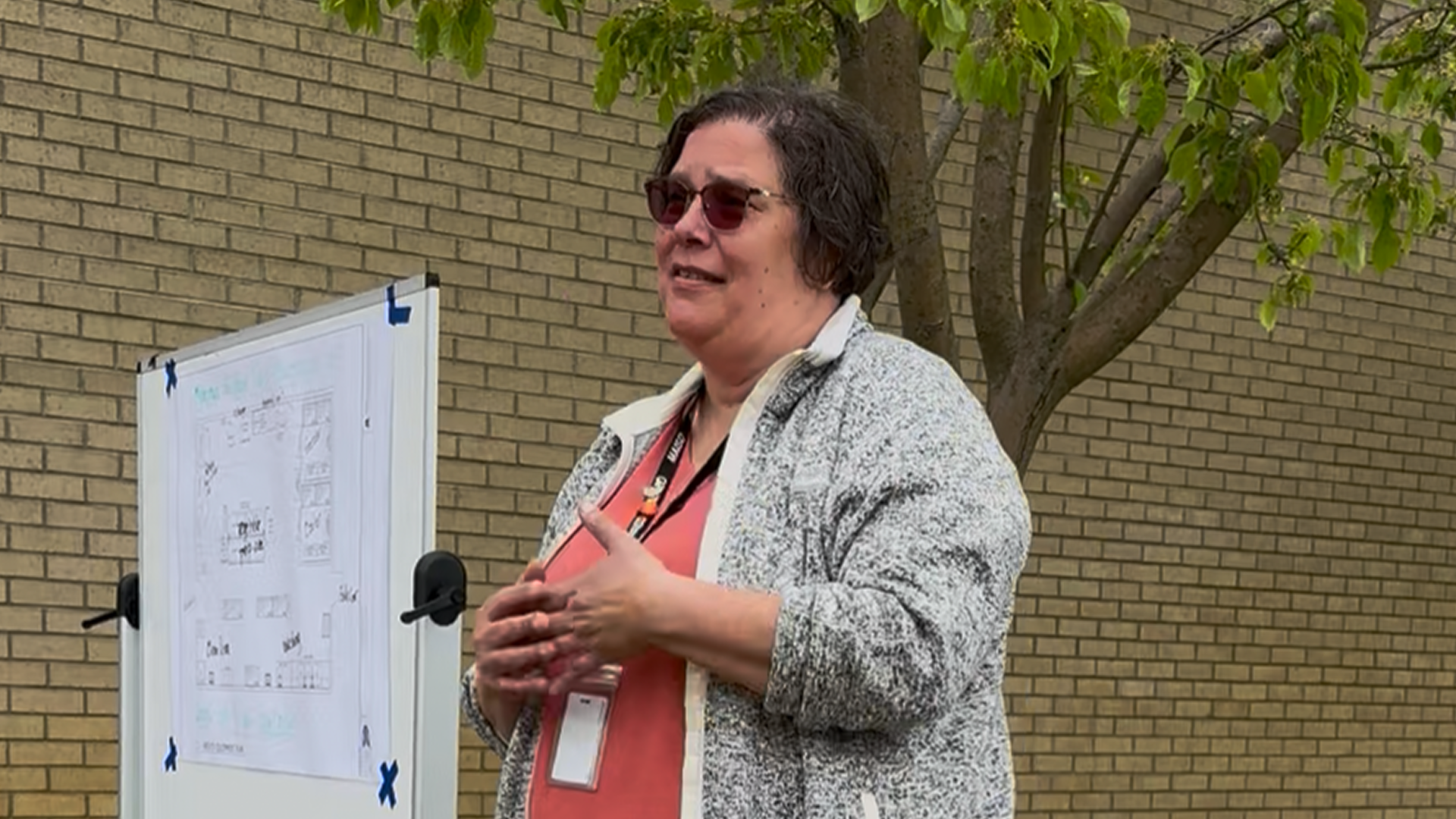
Pictured: Elissa Penczar, Career and Technical Education (CTE) Food Systems Coordinator at MAISD
The power of school food
Public school cafeterias are the largest restaurant chain in America, with more locations than Starbucks, McDonald’s and Subway combined. Together, they serve over 7.5 billion meals per year to kids, making them one of the most powerful levers we have for improving children’s health.

Eat Real’s certification program goes above and beyond USDA requirements, helping districts serve food that is lower in sugar, minimally processed, locally sourced, and made with healthy and responsible proteins. Montague is living proof that those standards, while rigorous, are achievable with the right support.
But what made the school lunch tour so memorable wasn’t just the program on display — it was the spirit Gorman brought to it. He didn’t host this event to take a victory lap. He gathered food service directors and school food advocates from across the region because he genuinely believes the work is bigger than any one district.
“It isn’t all about Montague schools,” he said. “For us to be successful, it has to be a county-wide effort; it has to be a regional effort.”
That generosity — that instinct to share, to lift, to build together — is exactly the kind of leadership that makes a movement. And the Kickin’ Coleslaw, a student-created recipe that’s become something of a Montague legend, says everything about what happens when you give young people real ownership over their food.
“I love our kickin’ coleslaw,” Gorman said with unmistakable pride. “You put that on a whole muscle chicken sandwich. That is the bomb.”
He’s right. It is.
Join Us
If you’re a food service director, school administrator, or community leader in Michigan, we want to hear from you. Eat Real is actively partnering with districts across Muskegon, Kent, and Ottawa counties, and what we saw in Montague makes us more confident than ever that West Michigan is ready.
Real food in schools isn’t a luxury. It’s a lever. And Michigan is proving it works.
Contact us to learn more.